

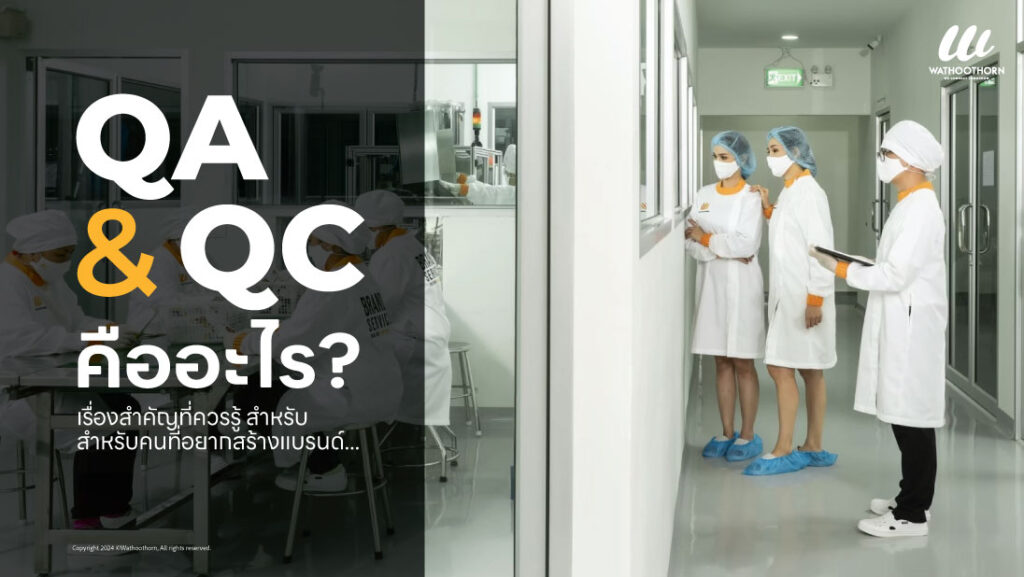
What is QA&QC?
Many people may have heard the terms QA and QC, but may not be sure how they differ and how important they are to building a cosmetics brand. This is especially true for those looking for a cream manufacturing factory to develop their own brand. Understanding Quality Assurance (QA) and Quality Control (QC) is a fundamental principle that helps ensure the products released to the market are standardized, safe, and meet the specified quality standards.
Quality Assurance (QA) is a system for planning and setting standards at every stage of the production process to prevent errors from the outset. This includes everything from raw material selection and production process definition to documentation, personnel training, and internal system audits. A cream manufacturing plant with a strong QA system can effectively control its processes to meet international standards such as GMP or ISO, reducing risks and building long-term trust with brand owners.
Quality Control (QC) is the process of inspecting and testing the quality of raw materials, during production, and in finished products to ensure that goods meet established specifications. This includes checking the physical characteristics of the cream, pH level, formula stability (stability test), and verifying cleanliness and safety before product delivery. A detailed and rigorous QC system ensures consistent quality across all production batches, allowing for confident sale and market availability.
For those looking to create their own cream brand, choosing a cream manufacturing factory with a complete and systematic QA and QC system is a crucial factor that reflects the factory's professionalism. This not only helps control product quality but also protects the brand image and builds long-term consumer trust.
What is Quality Assurance (QA)?
Quality Assurance (QA) is a comprehensive quality management system aimed at “preventing problems” and ensuring that products and services consistently meet customer requirements, standards, and specifications. It doesn't focus solely on detecting errors, but rather on establishing correct systems, processes, and work standards from the outset.
In the context of a cream manufacturing plant, QA encompasses everything from establishing standard operating procedures (SOPs), supplier selection and evaluation, document control, personnel training, risk management, to continuous monitoring and system improvement, ensuring that production processes meet international standards such as GMP or ISO.
In short, QA stands for “Quality Assurance,” a system that ensures the entire organization operates under the same standards. It involves continuous monitoring, review, correction, and improvement, utilizing data from the Quality Control (QC) process to analyze and refine processes. The goal is to enhance product quality and maximize customer satisfaction in the long term.
What is inspection and quality control (QC)?
Quality Control (QC) is the operational quality control and inspection process to ensure that every stage of product manufacturing meets specified standards in terms of safety, technical properties, and customer specifications. QC functions to “detect and prevent errors” before, during, and after production, ensuring that products released to the market are of consistent quality and meet international standards.
In the cosmetics manufacturing process of a cream factory, the QC system covers inspection in 5 main steps as follows:
1. Raw Material Quality Inspection
All raw materials used in production must have quality certification documents, such as a Certificate of Analysis (COA), clearly specifying the source, importer, and distributor. Afterward, QC personnel will conduct random inspections of the raw materials according to the established specifications to confirm that their physical and chemical properties meet the specifications before entering the production process.
2. Packaging Quality Inspection
Incoming packaging must meet specified standards (Standard Specification). The acceptance inspection process is similar to that of raw materials, but utilizes a sampling plan for single-item acceptance according to MIL-STD-105D standards and defines an Acceptable Quality Level (AQL) to control acceptable deviation rates. This helps reduce the risk of damage or defects in packaging before it enters the production line.
3. Bulk Product Testing
The quality control of product meat before packaging is divided into two main parts:
Physical & Chemical Testing
- Appearance (external appearance)
- Color
- Odor
- pH (acidity-alkalinity)
- Viscosity
To ensure that the product's ingredients meet the specified formula and standards.
Microbiology Testing
Check for contamination by bacteria, fungi, and pathogens as required by law, by sending samples to a laboratory accredited according to ISO/IEC 17025 standards to confirm safety before packaging.
4. In-Process Control (Quality Control During Production)
During the production process, QC line personnel continuously inspect the work on the production line, such as randomly checking the first 10 pieces before actual production begins and random checks every hour during production. This is to verify the accuracy of packaging, labeling, sealing, boxing, and other components to ensure they meet the specified standards and minimize errors that may occur during the work process.
5. Finished Goods Inspection
Once the product is complete, QC personnel conduct random inspections according to the standard MIL-STD-105D sampling plan and specified AQL values to verify overall quality before market launch. Retain samples are also stored for future reference based on the product's lifespan, allowing for retrospective investigation if necessary.
In summary, a QC system is a crucial mechanism for operational quality control, ensuring consistency, safety, and compliance with customer and legal standards across all production batches. This is essential for cream and cosmetics manufacturing plants aiming to build trust and long-term brand sustainability.
Return to Table of ContentsQA and QC are specialized terms that you should know.
Standard (prototype for production)
Standard refers to a reference sample or prototype used as a criterion for production and quality control. This ensures that every batch of product manufactured meets the customer's initial specifications regarding color, scent, texture, and other details. It acts as a “quality template” to control production consistency.
AQL (Acceptable Quality Level)
AQL (Acceptable Quality Level) refers to the level of acceptable quality, specified as the maximum percentage (%) of defective products that can be accepted in each production batch. It is used as a criterion for random product inspections to control risk and maintain quality standards at a specified level.
From all of this, it is clear that QA and QC play crucial roles in the cosmetics manufacturing process. Both systems work together to prevent and reduce errors that could affect product quality, safety, and brand image in the long term.
To summarize in simple terms:
QA emphasizes “system implementation and prevention” to avoid problems from the outset.
QC emphasizes “inspection and screening” to find and correct substandard products before they are released to the market.
way Cream manufacturing factory Wathoothorn has a QA & QC team that oversees and controls production standards at every stage, ensuring that our clients' brands receive products of consistent quality that strictly meet specifications.
Generally Cosmetics manufacturing plant While traditionally, services might only involve production according to a timeline and then the process is complete, the Wathoothorn cream manufacturing plant has now upgraded its services to a new concept. Brand Service+ More than just a one-stop service, we don't just handle production. We also have a team of marketing and branding consultants to advise on target audiences, product positioning, sales strategies, and distribution channels, enabling clients to create a comprehensive and sustainably growing cosmetics brand.
- phone : 02-961-7944
- Line : @wathoothorn (Includes the "@" symbol.)
- Facebook: Wathoothorn.GMPPlus
- Youtube : wathoothornchannel
“WE CONNECT TOMORROW: Connecting dreams to the future”